 English
 Italiano


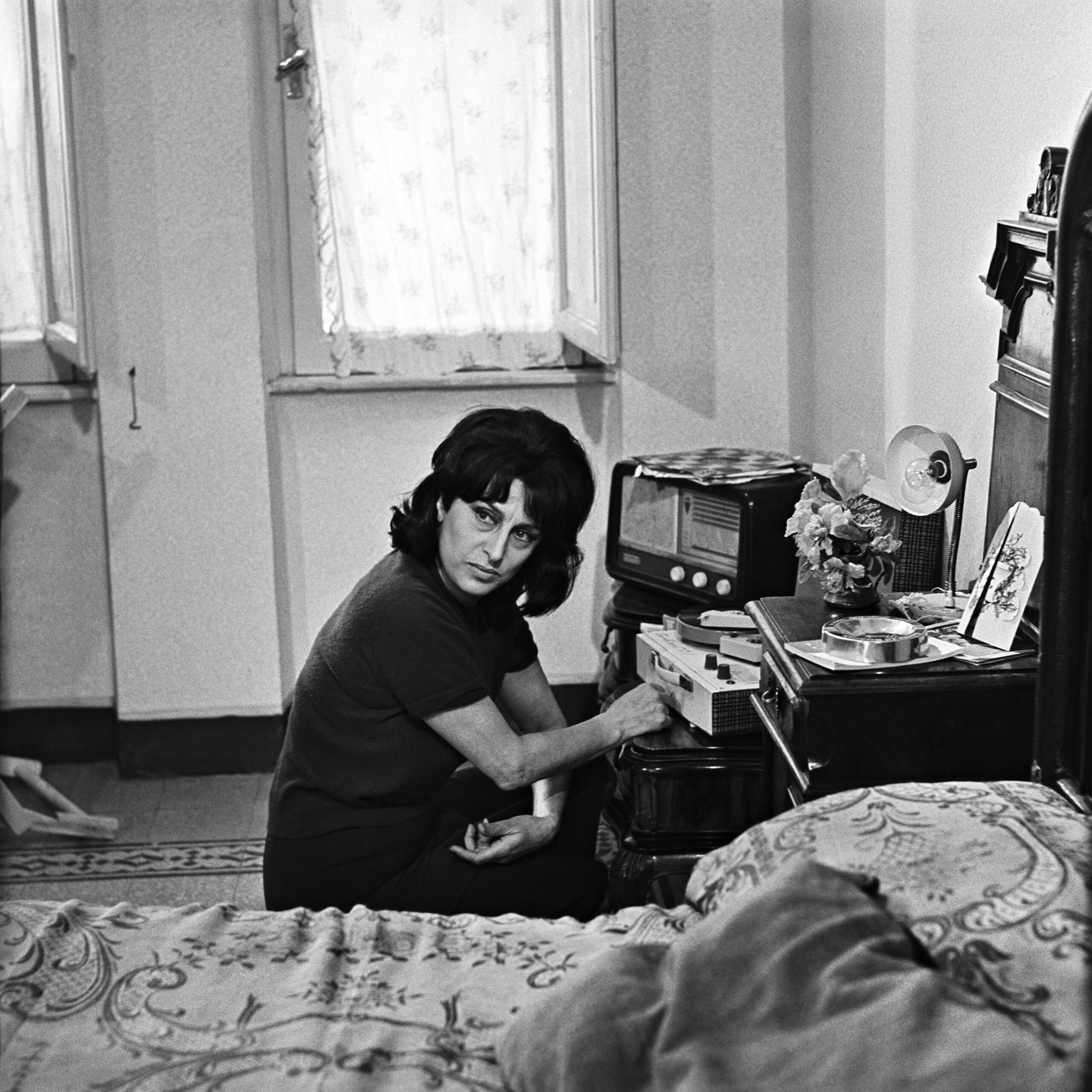
Mamma Roma (Italy, 1962, 106′)
Sunday, October 11, 10:00 a.m., Cinema Centrale Arthouse, Via Carlo Alberto 27
In collaboration with the Cineteca Nazionale.
Admission: Free.
International title: Mamma Roma
Original title: Mamma Roma
Director: Pier Paolo Pasolini
Screenplay: Pier Paolo Pasolini in collaboration with Sergio Citti
Photography: Tonino Delli Colli
Edit: Nino Baragli
Music: Antonio Vivaldi directed by Carlo Rustichelli
Cast: Anna Magnani, Ettore Garofalo, Franco Citti, Silvana Corsini, Luisa Loiano, Paolo Volponi
Production: Arco Film
Distribution: Cineriz
Mamma Roma is a prostitute from Rome who wants to change her life. When Carmine, her panderer, gets married, he decides to free her. The woman seizes the opportunity to close with her past, she takes back her son Ettore, who lived Guidonia and, with her savings, sets up a stand where she sells fruits and vegetables and moves in an apartment in the periphery of Rome with Ettore. She devotes all her energy to ensuring her son – unaware of his mother’s past – can redeem himself from his subproletariat condition and so he can find a respectable job. But that past is destined to return, and Ettore to spiral into an everyday existence that will lead him to his demise. Pasolini’s second movie, after Accattone, Mamma Roma inspired by a true event that Pasolini renders using his unique poetic, making Ettore a Christological figure, the protagonist of a passion that culminates on prison restraint bed resembling an asylum, struck in a pose inspired by Andrea Mantegna’s Dead Christ. Pasolini built a movie that, even if it hints at neorealism, he overcomes it to create a visual and diegetic composition that proceeds by leaps and ellipses within which he stages an unmatched description of bodies and spaces of that subproletariat so dear to him.
Mamma Roma is presented at the festival with in its 2022 restored version, on the occasion of Pasolini’s centenary, from the Centro Sperimentale di Cinematografia (CSC) – Cineteca Nazionale in Rome.
Pier Paolo Pasolini. He was a poet, novelist, essayist, dramatist, director, screenwriter, actor, painter and of the most acclaimed Italian intellectuals of the 20th century. His filmography, which consists of fictional movies and documentaries, began in 1961 when, with Accattone, he brought a new and non-replicable way of doing cinema on the screen. He talked about Roman borgatas, the story of Christ, tragedies and short novels, the bourgeoisie meant to be blown apart, sex and Fascism, Palestine, India, Africa, Yemen. A corpus that continues to question us.
Filmography: Accattone (1961), Mamma Roma (1962), La ricotta (1963, episodio di Ro.Go.Pa.G.), La rabbia (doc., 1963, prima parte, la seconda diretta da Giovannino Guareschi), Comizi d’amore (doc., 1964), Sopralluoghi in Palestina per Il Vangelo secondo Matteo (mlf, doc., 1964), Il Vangelo secondo Matteo (1964), Uccellacci e uccellini (1965), La Terra vista dalla Luna (1966, episodio de Le streghe), Che cosa sono le nuvole? (1967, episodio di Capriccio all’italiana), Edipo re (1967), Appunti per un film sull’India (mlf, doc., 1968), Teorema (1968), La sequenza del fiore di carta (1968, episodio di Amore e rabbia), Porcile (1969), Appunti per un’Orestiade africana (doc., 1969), Medea (1970), Il Decameron (1971), Le mura di Sana’a (sf, doc., 1971), I racconti di Canterbury (1972), Il fiore delle Mille e una notte (1974), Salò o le centoventi giornate di Sodoma (1975).